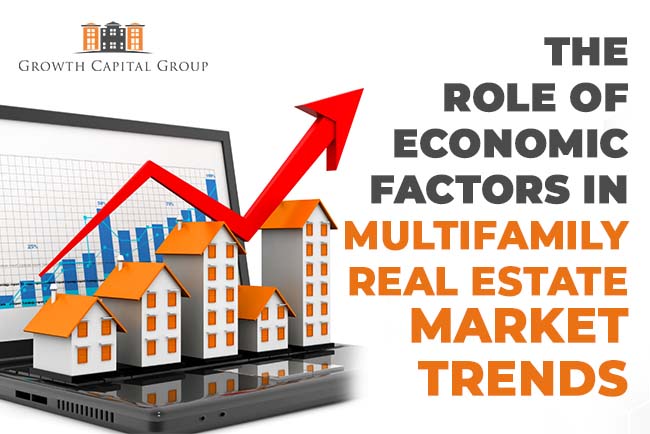
The Role of Economic Factors in Multifamily Real Estate Market Trends

multifamily real estate market trends


The multifamily real estate market trends are influenced by various factors, with economic indicators playing a significant role in shaping its trends. Economic factors provide crucial insights into the overall health of the economy and affect the demand and supply dynamics within the multifamily real estate sector. In this article, we will explore the key economic factors that impact multifamily real estate market trends and understand their implications for investors, developers, and renters alike.

Understanding Economic Factors in Multifamily Real Estate Market Trends

  • Gross Domestic Product (GDP)
    The value of all products and services generated inside a nation’s borders is measured by its GDP, a crucial economic statistic. A growing GDP indicates a robust economy with higher consumer spending power, which can positively impact the multifamily real estate market. When GDP is on the rise, individuals and families have higher incomes, increasing the demand for rental properties.
  • Employment and Wage Growth
    Employment and wage growth are closely linked to the multifamily real estate market. When the job market is thriving and wages are increasing, more people can afford to rent or upgrade their living arrangements. Conversely, a stagnant job market or declining wages may lead to decreased demand for multifamily properties. 
  • Interest Rates
    Interest rates have a significant influence on the cost of borrowing and can affect both developers and renters. Lower interest rates encourage developers to invest in new multifamily projects, resulting in increased supply. Additionally, lower rates can make homeownership less attractive, leading to higher demand for rental properties.


Population Dynamics

1 Demographic Changes
Demographic shifts, such as changes in age distribution and household formation patterns, impact multifamily real estate market trends. For instance, the millennial generation’s preferences for urban living and delayed homeownership have fueled the demand for multifamily properties in city centres.
2 Migration Patterns
Migration patterns play a role in determining the demand for multifamily properties in specific regions. Factors such as job opportunities, lifestyle preferences, and affordability can influence individuals and families to move to certain areas, thereby affecting the multifamily real estate market.

Supply and Demand Dynamics

1 Housing Inventory
The availability of housing inventory directly affects the multifamily real estate market. When there is a shortage of rental units, landlords have more leverage, leading to higher rental rates. Conversely, an oversupply of rental properties can result in increased competition among landlords and potentially lower rental rates.
2 Rental Affordability
Affordability is a crucial factor in the multifamily real estate market. Rising rental costs relative to incomes can make renting less affordable for individuals and families, potentially leading to a decrease in demand. On the other hand, affordable rental options can attract more tenants and drive market growth.

Market Sentiment and Investor Confidence

1 Consumer Confidence
Consumer confidence reflects people’s optimism about the overall state of the economy. High consumer confidence often translates into increased spending and a stronger housing market, including the multifamily sector. Positive sentiment can drive demand for rental properties and stimulate investment activity.

2 Investor Sentiment
Investor sentiment plays a vital role in shaping multifamily real estate market trends. Favourable economic conditions and market stability can boost investor confidence, attracting capital to the sector. On the contrary, economic uncertainty may lead to cautious investor behaviour, impacting market dynamics.

Government Policies and Regulations

1 Tax Incentives
Government policies, such as tax incentives for real estate development or rental properties, can influence the multifamily market. Tax benefits can incentivize developers to invest in multifamily projects, potentially increasing the supply of rental units and impacting market trends.
2 Zoning and Land Use Regulations
Zoning and land use regulations imposed by local governments can affect the availability and development of multifamily properties. Restrictive regulations may limit new construction or restrict the conversion of existing properties, leading to supply constraints and potential market imbalances.

Read more about Multifamily Investment Strategy for Cash Flow Generation

Conclusion
Economic factors play a crucial role in shaping multifamily real estate market trends. GDP growth, employment and wage dynamics, interest rates, population changes, supply and demand dynamics, market sentiment, and government policies all influence the multifamily market. Understanding these factors is essential for investors, developers, and renters to make informed decisions in this ever-evolving sector.

Related The Multifamily Real Estate Landscape

Feel free to contact us with any questions regarding multifamily investment. 


FAQs (Frequently Asked Questions)

Q: How do economic factors impact multifamily real estate investment?
Economic factors such as GDP growth and employment rates can influence the demand for rental properties and affect the profitability of multifamily real estate investments.
Q: What role does population growth play in the multifamily real estate market?
Population growth, especially in urban areas, drives the demand for multifamily properties as individuals and families seek housing options in vibrant and convenient locations.
Q: How do interest rates affect multifamily real estate financing?
Lower interest rates can make borrowing more affordable, encouraging developers to invest in multifamily projects and potentially increasing the supply of rental units.
Q: What impact do government policies have on the multifamily real estate market?
Government policies, such as tax incentives and zoning regulations, can influence the availability of rental properties and impact market trends.
Q: Why is consumer confidence important for the multifamily real estate market?
High consumer confidence indicates a strong economy and can drive demand for rental properties, contributing to market growth.


Multifamily Investment Strategy for Cash Flow Generation

multifamily investment strategy


Regarding real estate investments, multifamily properties have proven lucrative for generating consistent cash flow. With the right multifamily investment strategy, investors can enjoy stable income streams while building long-term wealth. This blog will explore effective multifamily investment strategies that can help you maximize cash flow generation and achieve your financial goals.

Multifamily Investment Strategy for Maximize Cash Flow

  • Selecting High-Demand Locations: 

The correct location is crucial for cash flow generation in multifamily investments. Look for areas with strong rental demand, low vacancy rates, and promising economic growth. Urban centers, college towns, and areas with access to amenities and public transportation are often favorable options.

Analyzing Market Rental Rates: Conduct thorough market research to understand rental rates in your target area. Compare the potential rental income of multifamily properties with the local market rates. Investing in properties that generate rents above the mortgage and operating expenses is essential, ensuring positive cash flow.

  • Cash Flow Analysis:
  1. Perform a comprehensive cash flow analysis before investing.
  2. Consider rental income, operating expenses (including property management fees, maintenance costs, insurance, and utilities), financing costs, and potential vacancies.
  3. Utilize tools like spreadsheets or real estate investment software to estimate your possible cash flow and determine if the investment aligns with your financial objectives.
  • Value-Add Strategies: 

Implementing value-add strategies can significantly enhance cash flow in multifamily investments. Look for properties with the potential for improvements or renovations that can increase rental rates or attract higher-quality tenants. Consider cosmetic upgrades, energy-efficient improvements, or adding amenities such as a fitness center or community space. These enhancements can justify higher rents and create additional revenue streams.

  • Effective Property Management: 

Partner with a reputable property management company or build a reliable in-house team. Effective property management ensures proper tenant screening, timely rent collection, efficient maintenance and repairs, and proactive vacancy management. A well-managed property minimizes vacancies, reduces turnover costs, and maintains a positive cash flow.

  • Rental Market Optimization: 

Regularly review and adjust rental rates based on market trends and demand. Conduct a competitive analysis to determine if your rents are competitive within the local market. Consider offering incentives such as discounts on longer leases or amenities to attract and retain quality tenants. Additionally, consider exploring short-term rental options like Airbnb for specific units to maximize income potential in high-demand areas.

  • Expense Management: 

Efficient expense management is crucial for maintaining cash flow. Regularly review and optimize your operating expenses. Seek cost-effective service providers for maintenance, repairs, and utilities. Consider implementing energy-saving initiatives to reduce utility expenses. Review insurance policies to ensure you have adequate coverage at the best rates. Proactive expense management can increase profitability and cash flow.

  • Financing and Loan Options:
  1. Explore different financing options to optimize cash flow generation.
  2. Compare loan terms and interest rates from other lenders.
  3. Consider long-term fixed-rate loans to lock in favorable rates and stabilize expenses.
  4. Evaluate the benefits of government-backed loan programs specifically designed for multifamily properties, such as FHA or Fannie Mae loans, which often offer favorable terms.

How to calculate cash flow with a multifamily investment Strategy?

Calculating cash flow on a multifamily property involves analyzing the income and expenses associated with the investment. Here’s a step-by-step guide on how to calculate cash flow:

  • Determine Gross Potential Income (GPI): 

Start by determining the potential rental income for all units in the multifamily property. Multiply the total number of units by the market rent for each team. This calculation provides the gross potential income.

  • Account for Vacancy and Collection Losses: 

Consider the potential vacancy and collection losses when estimating rental income. Deduct a percentage (typically 5-10%) from the GPI to account for periods when units may be vacant, or tenants may not pay on time.

  • Calculate Effective Gross Income (EGI): 

Subtract the GPI’s estimated vacancy and collection losses to obtain adequate gross income. The EGI represents the actual income the property is expected to generate.

  • Determine Operating Expenses: 

Identify all the expenses of operating the multifamily property. These expenses include property taxes, insurance, utilities, maintenance, repairs, property management fees, and other recurring costs. It’s essential to consider both fixed and variable expenses.

Conclusion: 

A well-executed multifamily investment strategy can provide consistent cash flow and help you achieve your financial objectives. You can maximize cash flow generation and build long-term wealth by conducting thorough market analysis, implementing value-add strategies, optimizing rental rates, managing expenses efficiently, and utilizing suitable financing options. Remember to stay proactive, monitor market trends, and adapt your plan to ensure continued success in your multifamily investments.

Unlock the potential of multifamily properties for passive income and financial freedom. For more details Get in touch with us.

Multifamily Value-Add Strategy: How to Boost Your ROI

multifamily value add strategy

Introduction: 

Investing in multifamily properties can be a profitable enterprise, but to maximize your return on investment (ROI), value-add tactics must be put into practice. These tactics entail thoughtful upgrades to the property that raise its market worth and draw in renters willing to pay more. This blog post will discuss several efficient multifamily value-add tactics to increase ROI and help you build a profitable investment portfolio.

How Can Multifamily Value-Add Strategy Boost Your ROI?

  • Improve the Interior: 

Improving the interior of apartments is one of the best methods to increase their value. The asset’s curb appeal can be considerably increased with renovations like upgrading fixtures, laying new flooring, and modernizing the kitchen and bathroom. Focus on premium components and modern designs that resonate with your target market. You can entice tenants willing to pay greater rent by attractively furnishing the flat.

  •  Improve Curb Appeal: 

Because first impressions count, your multifamily property’s curb appeal can significantly impact its value. Spend money on landscaping, exterior painting, upgrading the foyer, and adding eye-catching lighting. Prospective tenants will be drawn to a well-kept and aesthetically pleasing property, giving them trust in the house’s quality.

  • Add amenities: 

Offering enticing facilities is a successful value-add tactic. Consider including extras like a fitness center, collaborative workspaces, outdoor places, or standard lounge rooms. These features can set your house apart from competitors and support higher rental prices. To determine the amenities that are most in demand in your target location and to accommodate the desires of your potential tenants, conduct market research.

  • Enhance Energy Efficiency: 

Making energy-efficient improvements can attract tenants who care about the environment while lowering utility expenses. Install LED lighting, programmable thermostats, energy-efficient appliances, and low-flow plumbing fixtures. These upgrades can increase the number of renters who value sustainability and lower your property’s operating costs, increasing your return on investment.

  • Strengthen Security: 

Tenants place a high priority on safety and security. With security features like entry systems, video cameras, and well-lit communal spaces, your property may become more appealing. Consider including extras like a package delivery service or safe parking as well. Tenants are more inclined to stay longer and pay higher rent when they feel safe and secure.

  •  Implement technology:

Using technology to your advantage can improve tenant satisfaction and streamline operations. Consider installing innovative home features like mobile-enabled property management platforms, keyless entry systems, and automatic thermostats. These technological improvements can increase productivity, save maintenance costs, and draw in tech-savvy renters who are prepared to pay more for a flawless living experience.

  • Focus on Customer Service: 

Maintaining Tenant Retention and Attracting Referrals Requires Excellent Customer Service. Respond quickly to maintenance needs, create transparent communication channels, and provide practical ways for tenants to pay rent. Lease renewal rates are higher with content tenants, which lowers turnover expenses and maintains a constant revenue flow.

  • Conduct rigorous market research 

to find value-adding possibilities and make educated decisions. Recognize the demographic trends, local rental market, and level of demand for particular features or facilities. Your investment selections will be guided by this information, ensuring that your property satisfies the needs of the intended market and eventually increases your return on investment.

Related 1. Value Add Real Estate Property Definition And Strategy

               2. How To Add Value To A Real Estate Investment?

Conclusion: 

Adding value-adding tactics to your multifamily real estate venture will significantly increase your return on investment. You can draw in top-notch tenants, boost rental income, and ultimately build a successful investment portfolio by renovating the interior, improving curb appeal, adding amenities, increasing energy efficiency, putting security first, implementing technology, concentrating on customer service, and conducting market research. Keep in mind the successful multifamily.

Unlock the potential of your investment in many homes. Discover how to increase your ROI using our value-added techniques Get in touch with us.

Safeguarding Your Passive Real Estate Investments Amidst Economic Uncertainty

real estate investments


Introduction

Economic recessions are inevitable, and passive real estate investors should be prepared to protect their assets during such turbulent times. With the right strategies, investors can weather the storm and emerge stronger. In this article, we will discuss the steps passive real estate investors can take to safeguard their investments during a recession.

How to Safeguard Your Passive Real Estate Investments Amidst Economic Uncertainty?

  1. Diversify your investment portfolio

One of the best ways to mitigate risk during a recession is by diversifying your investment portfolio. Passive real estate investors should consider investing in different asset classes, including stocks, bonds, and other sectors. This diversification will help reduce the impact of any single investment underperforming during a financial downturn. It is also wise to diversify geographically, reducing the risk of regional economic issues affecting your entire portfolio.

  1. Focus on cash flow

Investing in cash flow favorable properties is essential during a recession. Prioritize properties that generate stable rental income, as these can provide a cushion during economic downturns. This consistent cash flow helps cover expenses, mortgage payments, and property maintenance, ensuring you can keep your investments afloat during challenging times.

  1. Maintain a substantial reserve fund

A healthy reserve fund is another critical aspect of protecting your passive real estate investments during a recession. This fund should cover at least six months of expenses, including mortgage payments, property taxes, insurance, and maintenance costs. A robust reserve fund provides a safety net during financial stress, allowing you to avoid making rash decisions and selling your investments at a loss.

  1. Keep an eye on property management

Property management plays a crucial role in safeguarding your investments during a recession. Ensure that your property managers proactively address tenant concerns, maintain occupancy rates, and minimize vacancies. An efficient property management team can make all the difference in weathering the storm and protecting your assets during tough economic times.

  1. Reevaluate your investment strategy

As the economic landscape shifts, it’s essential to reevaluate your investment strategy. This may involve adjusting your long-term goals, reallocating resources, and exploring new investment opportunities. Stay informed about market trends and be prepared to change your strategy. A flexible approach will help you navigate the challenges of a recession and emerge stronger on the other side.

  1. Refinance your mortgage

Refinancing can be a smart move during a recession if you have a mortgage on your passive real estate investments. With interest rates likely to be lower, refinancing can help reduce your monthly mortgage payments, providing additional financial flexibility. This can free up cash flow, allowing you to maintain your properties and make necessary improvements during a downturn.

  1. Network with other investors

During a recession, staying connected with other real estate investors is essential. Networking allows you to share insights, learn from others’ experiences, and discover new opportunities. Attend industry events, join real estate investment groups, and engage with your peers on social media platforms. This support network can help you adapt to changing market conditions and protect your investments during a recession.

Conclusion

While economic downturns can be challenging for any investor, passive real estate investors can take several steps to protect their assets. By diversifying your portfolio, focusing on cash flow, maintaining a substantial reserve fund, and staying flexible with your strategy, you can safeguard your investments and come out stronger on the other side of a recession. Remember, the best defense is a good offense – be proactive in preparing your assets for the future.

Take control of your investments today and navigate economic uncertainty with confidence. Start safeguarding your passive real estate investments. Get in touch with us.


The Rise of AI in Multifamily Property Management: Benefits and Challenges

multifamily property management

Artificial intelligence (AI) has rapidly transformed different industries, and the multifamily property management sector is no exception. AI-powered technologies are helping property managers streamline their operations, reduce costs, and improve tenant satisfaction. However, this technological revolution comes with its own set of challenges. In this article, we will explore the benefits and challenges of AI in multifamily property management.

Benefits Of AI In Multifamily Property Management

  • Improving Tenant Communication

AI-powered chatbots and virtual assistants can significantly help property managers improve their communication with tenants. These bots can answer tenant queries, schedule maintenance requests, and even provide personalized recommendations. With chatbots, tenants can get quick responses to their questions, and property managers can reduce their workload.

  • Enhancing Maintenance Management

AI-powered tools can help property managers optimize their maintenance operations. For example, predictive maintenance algorithms can analyze sensor data and identify equipment failures before they occur. This allows property managers to save money on repairs and reduce equipment downtime. Additionally, maintenance staff can use augmented reality (AR) tools to get real-time guidance and support while fixing equipment.

  • Streamlining Rent Collection

AI-powered tools can also help property managers streamline rent collection. With automated payment systems, tenants can pay their rent online, and property managers can receive timely payments. These tools can also send rent reminders and generate reports to help property managers better understand their financials.

  • Enhancing Security

AI-powered security systems can help property managers improve their security measures. For example, facial recognition technology can help detect unauthorized individuals entering the property. Additionally, AI-powered cameras can see unusual activity, alerting property managers of potential safety hazards.

Challenges Of AI In Multifamily Property Management

  •  Data Privacy Concerns

AI-powered technologies rely on data to make informed decisions. However, this raises concerns about data privacy. Therefore, property managers must ensure that the data collected and tenants’ privacy are protected.

  • Expensive Implementation

Implementing AI-powered technologies can be expensive, especially for smaller property management companies. Therefore, property managers need to ensure that AI’s benefits outweigh implementation costs.

  • Resistance to Change

Introducing AI-powered technologies can be met with resistance from staff and tenants. Property managers need to communicate the benefits of these technologies effectively to get buy-in from everyone involved.

  • Dependence on Technology

AI-powered technologies can sometimes be unreliable, and property managers need backup plans in case of system failures. Additionally, property managers need to ensure that staff is trained to use these technologies effectively.

The Future of AI in Multifamily Property Management

Despite the challenges of AI in property management, its potential benefits cannot be ignored. As technology advances, AI will become more sophisticated, and its applications in property management will expand. Property managers must embrace this change and adapt to the new realities of property management.

Read More: How Technology is Revolutionizing Multifamily Property Management

Conclusion

AI-powered technologies are transforming the multifamily property management sector, helping property managers streamline operations, reduce costs, and improve tenant satisfaction. However, these technologies have challenges, such as data privacy concerns, expensive implementation, and resistance to change. Property managers must carefully evaluate the benefits and challenges of AI-powered technologies before implementing them. With proper planning and training, AI-powered technologies can help property managers stay ahead of the competition and provide better tenant services.

Ready to leap? Learn about the benefits and challenges of AI in property management Schedule A free strategy call with us.

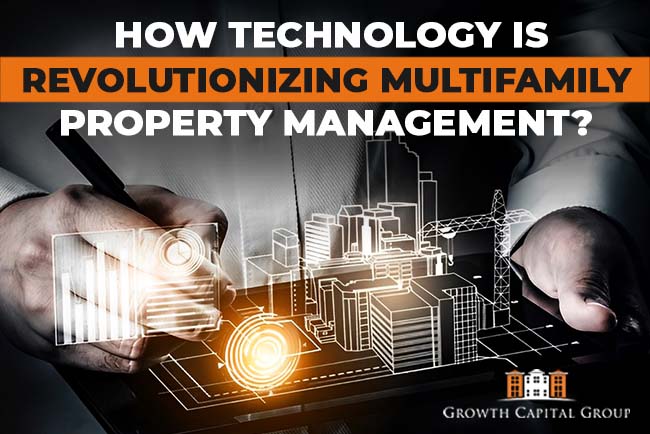
How Technology is Revolutionizing Multifamily Property Management

Multifamily Property Management

Multifamily property management has traditionally been time-consuming and complex, but recent technological advancements have revolutionized how property managers operate. With the help of new tools and software, property managers can streamline their operations, automate routine tasks, and improve communication with tenants. 

In this blog, we will look at some ways technology is revolutionizing multifamily property management.

Top Five  Ways Technology is Revolutionizing Multifamily Property Management

  1. Online Property Management Software

One of the most significant advances in property management technology is online property management software development. This software allows property managers to automate many routine tasks of managing a multifamily property. For example, property managers can use online software to track rent payments, manage maintenance requests, and communicate with tenants.

Online property management software also allows property managers to access real-time data on the performance of their properties. This data can be used to make informed decisions about property management strategies, such as setting rent prices, screening tenants, and scheduling maintenance.

  1. Smart Home Automation

Innovative home automation technology is also revolutionizing multifamily property management. Tenants can now control their living environment using their smartphones or voice-activated devices, such as Amazon Alexa or Google Home. Property managers can use intelligent home automation to remotely manage their properties’ energy usage, such as turning off lights and thermostats when units are unoccupied. This technology can also improve security by using smart locks or security cameras.

  1. Virtual Tours and Online Leasing

Another way technology is revolutionizing multifamily investing management is through virtual tours and online leasing. Property managers can now provide virtual tours of their properties, allowing potential tenants to view units from the comfort of their homes. This technology has become critical during the COVID-19 pandemic, as property managers have had to limit in-person interactions.

Online leasing has also become more popular, allowing tenants to sign leases and make payments online. This has made the leasing process faster and more convenient for tenants and property managers.

  1. Mobile Apps

Additionally, mobile apps have evolved into a crucial tool for property managers. Mobile apps allow property managers to communicate with tenants, track maintenance requests, and manage their properties from anywhere. Tenants can use mobile apps to pay rent, submit maintenance requests, and communicate with property managers.

Mobile apps have also improved tenant engagement, allowing property managers to send real-time notifications and updates to tenants. This has helped to build stronger relationships between tenants and property managers, leading to higher tenant satisfaction and retention.

  1. Artificial Intelligence

Artificial Intelligence (AI) is also transforming multifamily property management. For example, AI can be used to analyze data on tenant behavior, such as their payment history and maintenance requests. This data can then predict when tenants will likely move out or request maintenance, allowing property managers to proactively address issues before they become problematic.

AI can also automate routine tasks, such as responding to tenant inquiries or scheduling maintenance appointments. This allows property managers to focus on more complex tasks, such as developing long-term property management strategies.

Conclusion

Technology is revolutionizing multifamily property management, allowing property managers to automate routine tasks, improve tenant engagement, and make informed decisions about their properties. Online property management software, intelligent home automation, virtual tours and online leasing, mobile apps, and artificial Intelligence are just a few ways technology transforms how we manage multifamily properties. As technology continues to evolve, we can expect to see even more advances in multifamily property management in the years to come.

Discover the future of property management with our guide on how technology revolutionizes the multifamily industry.

Stay ahead of the curve and learn how technology is transforming multifamily property management! Schedule A free strategy call with us.


The Future of Multifamily Investment: How Technology is Changing the Game

multifamily investing

Multifamily investment has always been a lucrative market. However, the industry is now facing significant changes due to technological advancements. Technology has been transforming multifamily real estate investment for the last few years, and its effects are only becoming more apparent as the industry progresses. 

What Is The Future Of Multifamily Investment And How Technology Is Changing The Game?

  1. Automation is Revolutionizing Multifamily Investment

Automation is one of the most significant trends transforming multifamily investment. With the help of automation, investors can streamline their business processes, improve efficiency, cut costs, and enhance profitability. Automation technology includes bots, artificial intelligence, machine learning, and computer programs.

Using automation can help investors manage and streamline their workloads more effectively. Automation can also help investors reduce their risk exposure significantly. As a result, many real estate investment firms are adopting automation technology to optimize operations, make more data-driven decisions, and enhance returns.

  1. Data Analytics is Becoming More Important

The multifamily investment industry increasingly turns to data analytics to improve decision-making processes. Analysis of data allows investors to understand trends and patterns in the market. Data analysis can help investors identify opportunities for growth and profitability.

Multifamily investment firms are now using predictive analytics to generate insights about the best locations, building types, and amenities that will attract tenants. By analyzing tenant data, landlords can also obtain information about tenants’ preferences, such as their social and recreational activities. Such information can help landlords tailor their offerings to meet the expectations of their tenants.

  1. Smart Buildings and Smart Homes are Revolutionizing Living Experience

Developing intelligent buildings and smart homes is transforming the multifamily investment sector. Smart homes refer to residential buildings incorporating advanced technologies to automate lighting, temperature, and security processes. Intelligent buildings are commercial buildings that use technology to facilitate lighting, ventilation, and security operations.

Smart buildings and homes enable property managers to provide tenants with a more comfortable and convenient living experience. Tenants can enjoy intelligent services such as touchless controls, home automation systems, and voice-activated digital assistants. Intelligent buildings can also reduce energy costs, improve security, and help property managers manage the building more efficiently.

  1. The Emergence of Virtual Reality and Augmented Reality

Virtual reality (VR) and augmented reality (AR) technologies have been gaining popularity in the real estate industry. VR technology enables potential investors to tour the property they consider buying in a virtual environment. AR technology, on the other hand, enhances the physical environment by overlaying digital information.

Multifamily investment firms can implement VR and AR technologies to market their properties to potential tenants. VR technology can help tenants experience the building’s amenities, while AR technology can provide tenants with information about the property.

  1. Blockchain Technology is Enhancing Security and Making Transactions More Efficient

Blockchain technology has the potential to transform the multifamily investment sector. Blockchain is a decentralized digital ledger that can help facilitate secure transactions. Blockchain technology can enhance security by eliminating the need for central intermediaries, reducing costs, and improving transaction speed.

Many multifamily investment firms are already experimenting with the use of blockchain technology. Blockchain technology can help investors maintain excellent property records, speed up property transactions, and improve transparency.

In conclusion, 

Technology is significantly transforming the multifamily investment industry. Investors must know emerging trends and invest in the latest technologies to improve their bottom line. Automation, data analytics, intelligent buildings, VR and AR technologies, and blockchain can help investors streamline their processes, cut costs, and enhance profitability in the multifamily investment sector.

Ready to embrace the future of multifamily investment? Then schedule your 15 min one to one call with us.

How Multi-Family Investing Can Help You Weather a Banking Crisis

multifamily investing

The economic landscape can be unpredictable, and no one knows when the next banking crisis will occur. When a banking crisis does happen, it can be challenging to understand how to protect your investments. Multi-family investing, however, can be an excellent option for investors looking to weather these types of events. 

Why Multifamily Investing Is The Best Option?

Here are a few reasons why:

1.  Consistent Cash Flow

During a banking crisis, many investors will panic, causing the stock market to fluctuate wildly. Real estate, on the other side, tends to be more stable. Multi-family investing can provide a consistent cash flow through rental income unaffected by stock market fluctuations. Even during a banking crisis, people still need a place to live, and multi-family units can provide stable rental income.

2. Diversification

Multi-family investing can provide diversification in your investment portfolio. Investing in multifamily properties across different locations can mitigate the risk of an economic downturn in one area affecting all of your investments. Additionally, owning various properties across other sites can help you spread your risk.

3. Tangible Asset

Real estate is a tangible asset with inherent value that is not subject to the same volatility as intangible assets such as stocks and bonds. During a banking crisis, the value of intangible assets can be volatile and unpredictable, making it difficult to determine their actual worth. With real estate, the value of your property is more stable and can be easier to determine.

4. Inflation Hedge

Inflation can be a significant concern during a banking crisis. As currency’s value decreases, the cost of goods and services will increase. Multi-family investing can be an inflation hedge, as rental income tends to increase. Additionally, the value of your property may increase as construction costs rise, making your investment more valuable over time.

5. Affordable Housing

During a banking crisis, many people may struggle to afford to house. Multi-family real estate investing can provide affordable housing options, a critical need during an emergency. As an investor, you can feel good about providing affordable housing to those in need while generating a reliable income stream.

6. Less Volatility

During a banking crisis, the stock market can be highly volatile, with prices fluctuating rapidly. This can be stressful for investors who are looking to protect their wealth. Multi-family investing, on the other hand, is less volatile. In addition, rental income is typically stable, and property values tend to appreciate slowly and steadily over time. This means that investors can expect a more predictable return on their investment, even during a banking crisis.

7. Control over investments

Investing in multi-family properties gives investors much control over their investments. Unlike stocks, which are subject to the whims of the market, multi-family properties are primarily under the power of the investor. Investors can choose the location, type of property, and tenant profile and can change the property to increase its value. This level of control can provide a sense of security during a banking crisis.

8. Long-Term Investment

Multi-family investing is a long-term investment. While the stock market can be highly volatile, multi-family properties tend to appreciate slowly and steadily over time. This means investors can take a long-term view and ride out short-term fluctuations. For example, during a banking crisis, taking a long-term perspective can provide stability and reduce the stress of market volatility.

Also Read: Benefits of investing in multifamily real estate

Conclusion

In conclusion, multi-family investing can be a great way to weather a banking crisis. It provides a steady cash flow, less volatility, a hedge against inflation, diversification, a tangible asset, control, and a long-term investment. So, multi-family investing is worth considering if you’re looking for a way to protect your wealth during uncertain times. With careful research and planning, you can make strategic investments that will provide stable returns and protect your wealth for years.

Want to safeguard your wealth in uncertain times? Multi-family investing can help – schedule a free strategy call with us.

Risks And Challenges Of Multifamily Investment For High-Tech Professionals

multifamily investing

As a high-tech professional, you may be interested in investing in multifamily properties to diversify your portfolio and generate passive income. However, as with any investment, there are potential risks and challenges that you should be aware of before jumping in. In this blog post, we’ll discuss some of the most significant risks and challenges of multifamily investment for high-tech professionals and strategies for mitigating these risks.

Risks And Challenges Of Multifamily Investing For High-Tech Professionals

1. Market Volatility

One of the most significant risks of multifamily investment is market volatility. Real estate markets can be unpredictable, and factors like changes in interest rates, economic downturns, and new development projects can all impact the demand for rental properties. High-tech professionals who are used to dealing with the fast-paced and dynamic nature of the tech industry may feel comfortable taking on this level of risk. However, it’s important to remember that real estate investment is a long-term game, and it’s crucial to have a strategy to weather market ups and downs.

2. Tenant Turnover

Another challenge of multifamily investment is tenant turnover. When you own a multifamily property, you rely on your tenants to pay rent consistently and on time. If your tenants move out frequently, you’ll have to spend time and money finding new tenants, which can drain your resources. Additionally, frequent turnover can impact the property’s reputation and make it harder to attract new tenants in the future.

3. Property Management Issues

Managing a multifamily property can be time-consuming and complex, especially for high-tech professionals who may need to gain experience in the real estate industry. Property management tasks can include collecting rent, handling maintenance requests, dealing with difficult tenants, and legal issues. If you must prepare to take on these tasks, you’ll need to hire a property manager, which can affect your profits.

4. Economic Downturns:

Multifamily investment is susceptible to economic downturns, leading to reduced demand for rental properties and increased vacancy rates. This can negatively impact the investor’s cash flow and property values.

5. Regulatory Environment: The regulatory environment for multifamily investment can be complex, with different rules and regulations at the local, state, and federal levels. Investors must know these regulations and comply to avoid legal issues and fines.

6. Financing:

Multifamily investment typically requires significant capital, and securing funding can be challenging, especially for new investors. Interest rates and terms vary widely; investors must find the best financing options.

7. Competition:

Multifamily investment is a popular option for investors, and competition for properties can be fierce. This can drive up prices and make it difficult for investors to find properties that meet their investment criteria.

Mitigating Risks Of Multifamily Investing For High-Tech Professionals

Despite these risks and challenges, investing in multifamily real estate can be an intelligent choice for high-tech professionals looking to diversify their portfolios. 

Here are a few strategies for mitigating the risks associated with multifamily investment:

1. Partner with experienced operators.

One way to mitigate the risks of multifamily investment is to partner with experienced operators with a track record of success in the industry. By working with a professional partner, you can benefit from their expertise and leverage their network to find high-quality properties.

2. Diversify across multiple properties.

Another way to mitigate risk is to diversify your investments across various properties. This strategy can help you spread out your risk and ensure that you’re independent of the success of a single property.

3. Invest in stable markets.

Investing in stable markets can help you avoid some volatility associated with real estate investment. By focusing on needs with solid job growth, low vacancy rates, and a diverse economy, you can increase the likelihood that your property will be in high demand and generate consistent returns.

4. Stay up-to-date with regulations and industry trends: 

Real estate regulations and industry trends constantly evolve, and high-tech professionals should stay updated. This includes monitoring changes in zoning laws, rent control regulations, and tenant rights, among other things. Staying informed can help mitigate the risks of legal and regulatory issues.

In conclusion, 

Multifamily investment can be a lucrative opportunity for high-tech professionals, but it’s crucial to approach it with a clear understanding of the risks and challenges involved. By partnering with experienced operators, diversifying across multiple properties, and investing in stable markets, you can mitigate some risks and set yourself up for long-term success.

If you’re interested to know more about the Risks and Challenges of Multifamily Investment for High-Tech Professionals, Then please contact us at Growth Capital Group.

Riding The Wave Of Multifamily Real Estate With Passive Investment

Riding the wave of multifamily real estate (1)

Multifamily real estate has been a lucrative investment option for a long time and is becoming even more attractive in recent years. With the rise of rental demand and the increasing popularity of passive investment strategies, many investors are exploring opportunities in multifamily real estate. This blog will explore how you can ride the wave of multifamily real estate with passive investment.

What is Passive Investment in Multifamily Real Estate?

Passive investment in multifamily real estate is a strategy that allows you to invest in a property without being directly involved in the day-to-day property management. Instead, you work with a team of professionals who handle the property’s operations, maintenance, and management on your behalf. This approach is ideal for those who want to invest in real estate without the hassles of managing the property themselves.

In recent years, the trend towards passive income investments in multifamily real estate has been on the rise, driven by the desire for recurring income, inflation hedge, and the convenience of hands-off management.

Benefits of Multifamily Real Estate with Passive Investment

  1. Diversification

Diversification is one of the most important aspects of a well-rounded investment portfolio. By spreading your investments across various asset classes, you reduce your exposure to risk and increase your chances of success. Multifamily real estate investment provides a unique opportunity to diversify your portfolio, as it’s a tangible asset that’s not correlated with the stock market. This means that when the stock market is performing poorly, your real estate investments may still perform well, and vice versa.

  1. Recurring Income

One of the most attractive aspects of passive multifamily real estate investment is its recurring income. As a landlord, you’ll receive a steady stream of rent payments from your tenants, which can provide a significant source of passive income. This income can be used to pay for living expenses, pay down debt, or invest in additional properties, further increasing your wealth.

  1. Inflation Hedge

Inflation is a natural part of our economy, and it can significantly impact your investments over time. However, real estate is often considered a good hedge against inflation, as the value of properties generally increases over time along with the cost of living. This means that, even if inflation rises, the value of your properties will likely increase as well, protecting your investments from the effects of inflation.

  1. High Demand

The demand for rental properties has been on the rise for decades, and there’s no reason to believe this trend will change anytime soon. With a growing population, there will always be a need for housing, and multifamily real estate provides a convenient and affordable option for rent. This high demand, combined with a limited supply of properties, means that multifamily real estate will likely remain a solid investment choice for years to come.

How to Get Started with Passive Investment in Multifamily Real Estate?

Getting started with a passive investment in multifamily real estate is easier than you think. The first step is finding a reputable real estate investment firm specializing in passive investment in multifamily real estate. After that, you can research online or reach out to other real estate investors for recommendations.

Once you have found a real estate investment firm that you feel comfortable with, you will need to review their investment offerings and choose the one that best fits your investment goals and risk tolerance. In addition, it’s essential to carefully review the terms of each offering and make sure that you understand all of the fees and risks involved.

Multifamily investment strategy

Multifamily real estate investing has gained popularity as a lucrative strategy for passive income. It involves purchasing apartment buildings or complexes and generating revenue from rental income.

Here’s a short note on the multifamily investment strategy and how it allows investors to ride the wave of multifamily real estate with passive investment.

  • Stable Cash Flow: Multifamily properties offer a steady cash flow due to their multiple rental units. Unlike single-family homes, vacancies in one unit can be offset by the income from other units, providing a buffer against income fluctuations.
  • Economies of Scale: Investing in multifamily properties allows investors to benefit from economies of scale. Maintenance costs, property management fees, and other expenses can be spread across multiple units, reducing the overall operational costs and maximizing profitability.

Conclusion

Riding the wave of multifamily real estate with passive investment is an excellent way to enjoy the benefits of real estate investing without the hassle of managing a property. With the help of a reputable real estate investment firm, you can quickly get started with a passive investment in multifamily real estate and begin building wealth for your future.

If you want to know more about Multifamily real estate with passive investment, Then schedule a free call with us.